
Seven social qualities
A blog article shared by Kisa Bullmore - ECE kaiako, Christchurch
I am so grateful for the opportunity to attend the celebration of 100 years Waldorf Early Childhood at the Goetheanum. Each day I was inspired by those around me and for the work we do.
This reenforced the importance of the purposeful work we do every day has a big impact on our tamariki.
The lecture by Philipp Reubke on the seven social qualities has sparked several thoughts and caused me to reflect on how we can supported these unseen qualities that the tamariki and wider community experience. The inner work we do as teachers is one of the aspects of our practice that is unique to Waldorf education.
So, I thought I would share my reflections with you as well.
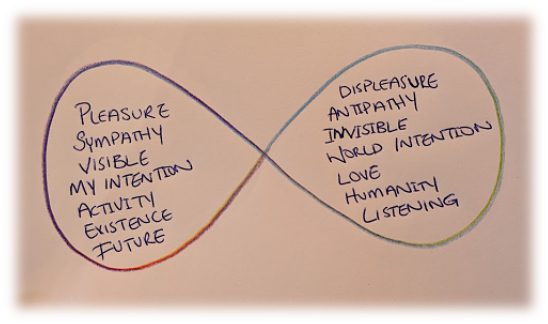
1. Pleasure – Displeasure
The example given was around children cleaning the kindergarten, and how wonderful it is to see.
Not cleaning until the children are in pain and all they do is clean, but for them to have the opportunity to enjoy caring for their space. To bring life to their will force, and pour love and pride into a shared environment. It is important for these cleaning tasks to be age appropriate for the tamariki, to get satisfaction and enjoy contributing to their classroom community.
2. Sympathy – Antipathy
The whole group is the whole group.
If there is an individual that wants to rule the space with an ‘everyone follow what I want to do’ attitude, the group will withdraw from that child as they can’t share their ideas. On the other hand, if there is a child who will only follow others and forget their own intentions, they will also get lost or rejected from the group over time. As kaiako, we need to support the children from both ends, prevent them from being pigeon-holed into roles and make sure they know that they are part of the whole group and not off to the side.
3. Visible – Invisible
Our inner and outward action. To move towards our thoughts and emotions being in line with our words and actions. If we are outwardly smiling and saying we agree with someone but inwardly holding a grudge or resentment, the unspoken disagreement can be felt. As kaiako we should model communication where our words and inner emotion align.
4. My Intention – Worlds Intention
Each day to bring intention and receive the intentions of others, both must be balanced. By sharing intentions, we can build strength in the community. In our roles, we often need to have difficult conversations, with colleagues, whānau and wider community. It is important to reflect on the intent and timing of these conversations. When preparing for these conversations we must ask ourselves, are they ready to receive the question, is it the right time? When in discussion, we must check in with ourselves, be aware if we are overpowering the conversation. Has the other person had room to speak? How is the conversation sitting within you? After the conversation, it is important to take a step back and reflect on what the issue was and to ask yourself ‘how can I learn from this, how can I grow from this?’
Every conversation and experience we have is an opportunity to grow. In the world today, the powers that be often think that their way to rule the world is the right way, and they will fuel their belief or idea with fire and power, often ignoring other world views. We must not forget each of our own intentions and to keep an open heart to the intentions of the world.
5. Activity – Love
Children come into the world as active beings, who love to move. We must find ways in which we can support this love of movement through our daily practice without the movement being competitive but for them to be active for the love of the world. As kaiako, we also want to be active and find our own activity for the love of the world. We know that physical health is important to support our mental health.
It is important to each find a movement we love, to show genuine love for the job we do, and the movement we bring into each day.
6. Existence – Humanity
Aren’t we lucky that we have Waldorf kindergartens all over the world. Not working alone, but all making the world a little brighter. When we are in the kindergarten to teach, we do not bring the worries of the outside world in. We want to show the good of humanity to our tamariki. The mood and energy we bring each day impacts the tamariki deeply. Gratitude affects the way we see the world. By bringing gratitude for the sun and water, our friends and whānau each day, gratitude will flow into our tamariki.
We are all shaped by our surroundings. All we know and do is what we have learnt from others around us. Keeping this in mind, we want our actions to be true and pure for our tamariki. Each day to hold within ourselves; that I am a gift to the world, enlivening the feeling of humanity and gratitude within us.
7. Future – Listening
Now to get to the seventh step, we must exercise the six steps above each day in our practice. We want our tamariki to come into the world and see that it is beautiful, good and true. In a world full of distraction and pollution, we must build love and resilience within our tamariki. To show goodness and gratitude through our actions and thoughts. We must give them the tools to feel confident within this world. This can be as simple as growing food together.
In the kindergarten we get tamariki to help turn the soil, place food scraps to the compost bin, plant seeds into the garden and to see the fruits of what they have planted. This builds resilience, hope and manaakitanga.
We are engaging for the future and who the tamariki will become. We want our tamariki to hold hope, kindness, strength, love, and resilience for the world they are walking into. To support this development, we must try and hold pure thinking, speaking, and walking (all movement) with the tamariki. I see ourselves as a guiding hand for the journey our tamariki are embarking on.
With these seven steps, you cannot have one without the other, if we do, it becomes unbalanced. Although these qualities may feel small, with these seven steps we can change the narrative of the next generation.