
Creating a doll as a way of facilitating and nurturing Play
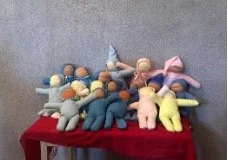
A reflection from Giselle Martinengo (Titirangi):
This workshop for the Steiner/Waldorf Early Childhood Conference 100-year anniversary was facilitated by Giselle Martinengo and Kathy MacFarlane April 2026: ‘Creating a doll as a way of facilitating and nurturing Play’.
Giselle took over making the dolls when Edith Van der Meer had to pull out of attending the conference. Much gratitude for this gesture!
There were 22 people in this workshop with a variety of experiences and cultural back grounds. One of the questions raised and a concern was expressed around the diminishing play in Steiner/Waldorf early childhood centres with the dolls.
The lack of interest and the way the dolls were treated if they were played with at all was a question.
The early childhood teachers said that they specifically came to this workshop to share this experience and to hear what was experienced in other centres and what our thoughts were around this.
Teachers making their doll in this workshop experienced a pride and a love for what they had created and saw this as a way of their renewing their own interest in dolls.
This led to a conversation around how we respect and care for the dolls in our rooms, if they lie forgotten, undressed and in need of mending or if they receive our special attention and
care at the end of each day. One thought was that many children these days don’t receive much (time consuming) care
and attention. In many cases the busy parents are happy to have left the house on time and the children arrive with hair unbrushed, no breakfast etc.
There are many one-child families, so the children don’t witness a younger sibling being cared for. If this is the case and without making our parents feel even more guilty, what can we do?
o Footbaths: I noticed a particularly bouncy child being given a warm foot bath and the look on the child’s face was pure bliss. He said to the teacher: ‘I never want to take my feet out of here!’
o Foot massage
o Morning circles that have sense of touch, especially of the other are received most willingly by the children of today
o Actions worthy of imitation: One teacher said at the beginning of each term she carries one of the dolls in a front pack and comforts it every now and then. Many children imitate this.
So, our take away was, never forget that firstly you are the role model and then the practical care and recognition you give to each child, they are then able to share with each other.