
Relationships and attachment
by Anjelica Oliver-Maxwell
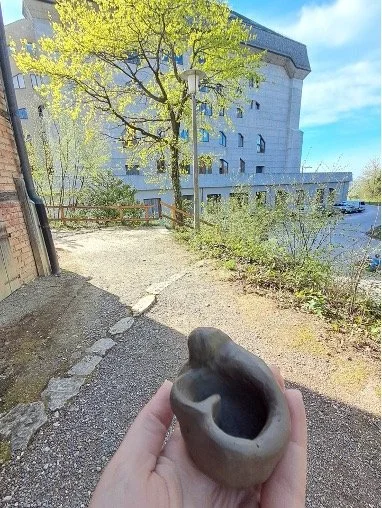
During the conference Kindness, Strength, Love- Seeds for a Healthy Unfolding, I was grateful to be part of a workshop on Attachment and Building Relationships led by Nomathemba Tindlini, Michal Reshef and Lourdes Tormes.
We explored the vital and profound role attachment and relationships play in the quality of care and education we offer babies, children and their families. Working with warmth, reverence and interest in the other allows for healthy development and the overcoming of challenges. The dance of relationship begins with the attunement of the attentive caregiver to the needs of the newborn. As adults, we have the opportunity to create a space within ourselves, to tune in to the infant and be present, to listen and respond from an inner sense of intuition. It is essential the infant develops a sense of trust that someone is there for me, who will listen, perceive my needs and respond gently. This dance of communication continues to be developed throughout childhood and practiced throughout life in our daily interactions.
When we consider the 12 senses presented by Rudolf Steiner, we can see the four lower senses Touch, Life, balance and movement give us information about ourselves and our body. Touch is the first language of the newborn. The skin in the largest sense organ we have and holds the barrier between us and the world. The deep pressure of being swaddled and held is calming and reassuring for the infant while the light touch of a wet nappy causes discomfort and upset. The life sense or interoception is about our sense of wellbeing. We only really become aware of our own well-being when something is not quite right, lack of sleep, hunger, stress, pain, emotional distress, lack of connection and illness are some of the factors which can affect our sense of wellbeing. How can I nurture my own well-being?
How can I create an environment where the child experiences well-being?
Where they feel seen, held and able to express their needs.
As human beings we are constantly striving to be balanced. Standing and walking are incredible achievements for the baby who can now hold themselves upright against gravity and direct their movement. Children develop the capacity of self-regulation through relationship with adults who are connected, calm, centered and able to co-regulate with them.
An inner perception of our own movement and awareness of our body in space. A baby’s first movements are reflexes which over time and with practice may become integrated and more conscious controlled movements become possible. It is through being able to move freely at their own pace that babies will develop a sense of their own dimensions and what their incredible body can do. As adults all 12 senses support our ability to be in relationship with another.
As teachers we considered our gesture of attachment and relationship to children, parents, colleagues and ourselves and through artistic exercises we reflected on our own biography.
What is your gesture of attachment to yourself?
Connections grow best in an atmosphere of love, warmth and presence, can we bring these qualities to our thinking and self-talk to give ourselves the same quality care we provide to the children?
It can take courage to look back though our childhoods and, from the role of an empathetic educator, create a warm welcome of ourselves within us.
We learn about ourselves though relationships with the other. For the infant and young child, the teacher is the most important environment. The child needs you, your warmth, your loving interest in them your consistent nurturing. The attachment and trusting relationship with the teacher is more valuable than the beautiful building and lovely resources. The safe base created by a trusting secure relationship allows the child to explore and play knowing there is security to return to.
By being a safe space for yourself you can be a safe space for others.
What do we need to develop as an adult to support the healthy development of a child?
Inner work is an important aspect of being a teacher. As Steiner/Waldorf teachers we strive to be worthy of the child’s imitation, in order to carry this task we need to support and strengthen ourselves.
Do I take enough care of myself?
How do I nurture my physical, emotional and spiritual health?
Do I find the balance between being myself and part of the world?
Am I mindful of my thoughts and feelings being as impactful as my deeds?
How do I work to balance outer and inner to be the sun for the child?
Am I steadfast in my resolve to provide an example of goodness for the children?
Can I remain openminded and listening in my steadfast resolve to a task?
Will cultivating gratitude for life in its wholeness including both the joys and the learning opportunities bring more depth and meaning to my life?
By striving to embrace these dispositions in our daily life, we can work to create a balanced life which nurtures both ourselves and the children and whānau we serve.
Finding a healing way to work with connection and relationships can be transformative in challenging situations. Profound transformation is possible when working from loving attachment.
A sense of trust and goodness in the world can be fostered. We all need someone who sees the gold in us, even one person can be the light in the dark and change a child’s life. What happens in early childhood lasts a lifetime!
We concluded the workshop standing in a circle demonstrating a gesture of attachment towards children.
There were multiple expressions of openness, embracing, loving warmth, creating space, holding space, inviting connection, loving gaze, observing eye - seeing true inner self, you are safe, I am here for you, I am here you can play. I was struck by the profound love the educators, from around the world, share with children and their families every day and the health giving and healing qualities this provides for the future of humanity.
Anjelica Oliver-Maxwell fromTe Kura o Rudolf Steiner i Ōtautahi was supported by SEANZ to travel to the conference.